Turmeric
Curcuma longa · Sanskrit: Haridra
A golden rhizome central to Ayurvedic cooking and skincare, valued for its warming, purifying qualities.
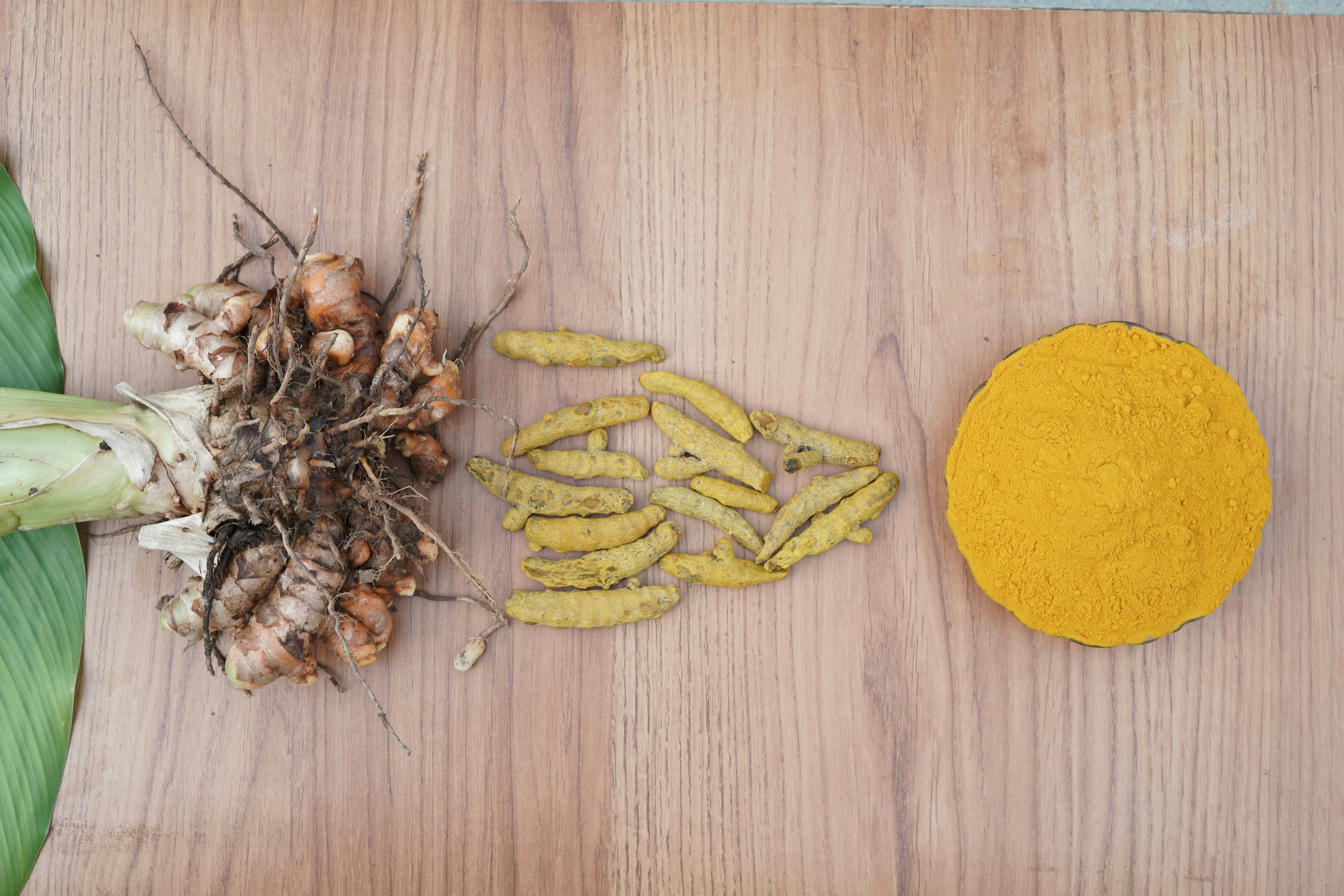
Haridra, turmeric, is as much a kitchen staple as a medicine. The fresh or dried rhizome gives curries their golden colour and appears in rituals from weddings to festivals. Ayurveda values it as a blood purifier (rakta shodhaka), for skin complexion (varnya) and for supporting digestion.
Its active compound curcumin is poorly absorbed on its own, which is why traditional cooking pairs turmeric with fat and black pepper. Research on curcumin for joint discomfort and inflammation is ongoing, with mixed results.
Properties
- • Rasa: Bitter, Pungent
- • Virya: Heating
- • Dosha: Balances all three doshas in moderation
- • Guna: Dry, Light
- • Vipaka: Pungent
- • Part used: Rhizome
Traditional uses
- Used traditionally to support healthy digestion
- Applied in traditional skincare preparations
- A staple culinary spice with warming properties
- High doses may not be suitable alongside blood-thinning medication. Discuss with your doctor if you have gallstones.
Thinking of experiencing Ayurveda in Kerala? Our team can help with treatment centres, stay and travel.
Have a question? Send us an enquiry
Our team replies by email. We can't diagnose or prescribe — for health concerns please see a qualified practitioner.
Herb information is educational. It is not a prescription. Consult a qualified Ayurvedic practitioner or doctor before use, especially if pregnant, nursing, or taking medication.